Washington Monument Cornerstone
The Lost SymbolThe Washington Monument Cornerstone is the buried foundation stone that Peter Solomon identifies as the hiding place of the Masonic Lost Word. In the novel, its importance lies not only in what it conceals—a Bible—but in what a cornerstone signifies: a beginning sunk into the earth, a container for objects entrusted to the future, and a meeting point between literal architecture and symbolic knowledge.
Form and traditional meaning
Peter explains the cornerstone through its physical placement and purpose. A true cornerstone is buried beneath the ground, a position that makes it the building’s first step upward from earth toward heavenly light. He also describes cornerstones as small vaults, often hollowed to hold meaningful items: talismans, photographs, proclamations, time capsules, or even human ashes. These traditions give the stone a dual character. It is structural foundation, but also a concealed record of the hopes and meanings attached to the building.
The novel connects that general custom to the Washington Monument. Langdon recalls that the Capitol’s cornerstone is so deeply buried that excavations have never found it, reinforcing the difficulty of locating a foundation stone once it has become part of a monumental structure. Peter’s account, however, turns burial from an obstacle into the point: what lies hidden beneath the monument may be more than a construction relic.
The stone as a clue
The cornerstone enters the conversation through a small cube-shaped stone box Peter gives Langdon. Langdon recognizes the resemblance, and Peter uses it to explain why a hollow stone could conceal something. The box is a clue to the kind of object he has in mind, not the monument’s cornerstone itself. Its shape makes the idea of a hidden vault concrete, translating an abstract legend into a familiar architectural form.
That distinction matters because the characters have been trying to read the Masonic Pyramid as a map to a literal place. Earlier, Langdon argues that portals and other esoteric images are often metaphors for transformation rather than physical structures. The cornerstone complicates that skepticism: a symbolic tradition about foundations and hidden wisdom is attached to a specific buried object at a specific monument. The story’s riddle moves between metaphor and material evidence rather than settling comfortably in either register.
The burial and its revelation
Peter tells Langdon that the Lost Word was buried in the Washington Monument’s cornerstone on July 4, 1848, during a full Masonic ritual. The revelation gives the monument a concealed history and makes the cornerstone a deliberate repository, rather than an incidental part of its construction. Peter insists that the object buried there is not a single ordinary word. The name Lost Word preserves the language of an ancient tradition, while its actual content is the Bible—the book Peter says carries the Word.
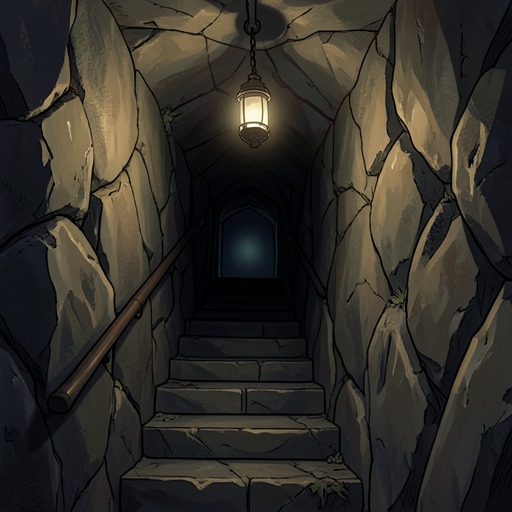
The disclosure is made during the descent of the monument’s 896-step winding staircase, which spirals around an open elevator shaft. On a landing, Peter’s flashlight reveals a stone medallion: a cloaked figure with a scythe and hourglass points toward an open Bible. The carving directs attention from the hidden foundation to the scriptural text it contains. Peter argues that the Bible’s persistence across centuries and the labor devoted to interpreting it point to concealed wisdom in its pages, expressed through allegory, parable, and riddling language.
Narrative and symbolic significance
The cornerstone links the novel’s pursuit of hidden knowledge to the physical history of a national monument. Its buried position embodies concealment, while its traditional role as the first stone laid makes it an image of beginnings. The hollow interior adds another layer: the foundation does not merely support what rises above it; it preserves something for later discovery. In Peter’s explanation, the object becomes a material counterpart to the novel’s recurring idea that meaning may be present yet veiled, awaiting the right interpretation.
The revelation also redirects the search for the Lost Word. Rather than finding a magical object that grants supernatural power, Langdon is pointed toward a Bible and a tradition of reading sacred texts for layered meaning. The cornerstone therefore resolves the geographical puzzle while preserving the interpretive one: locating the hidden book is not the same as unlocking the wisdom it contains.